


Lambert’s Bay Bird Island – Where the Gannets Rule and the Ocean Roars
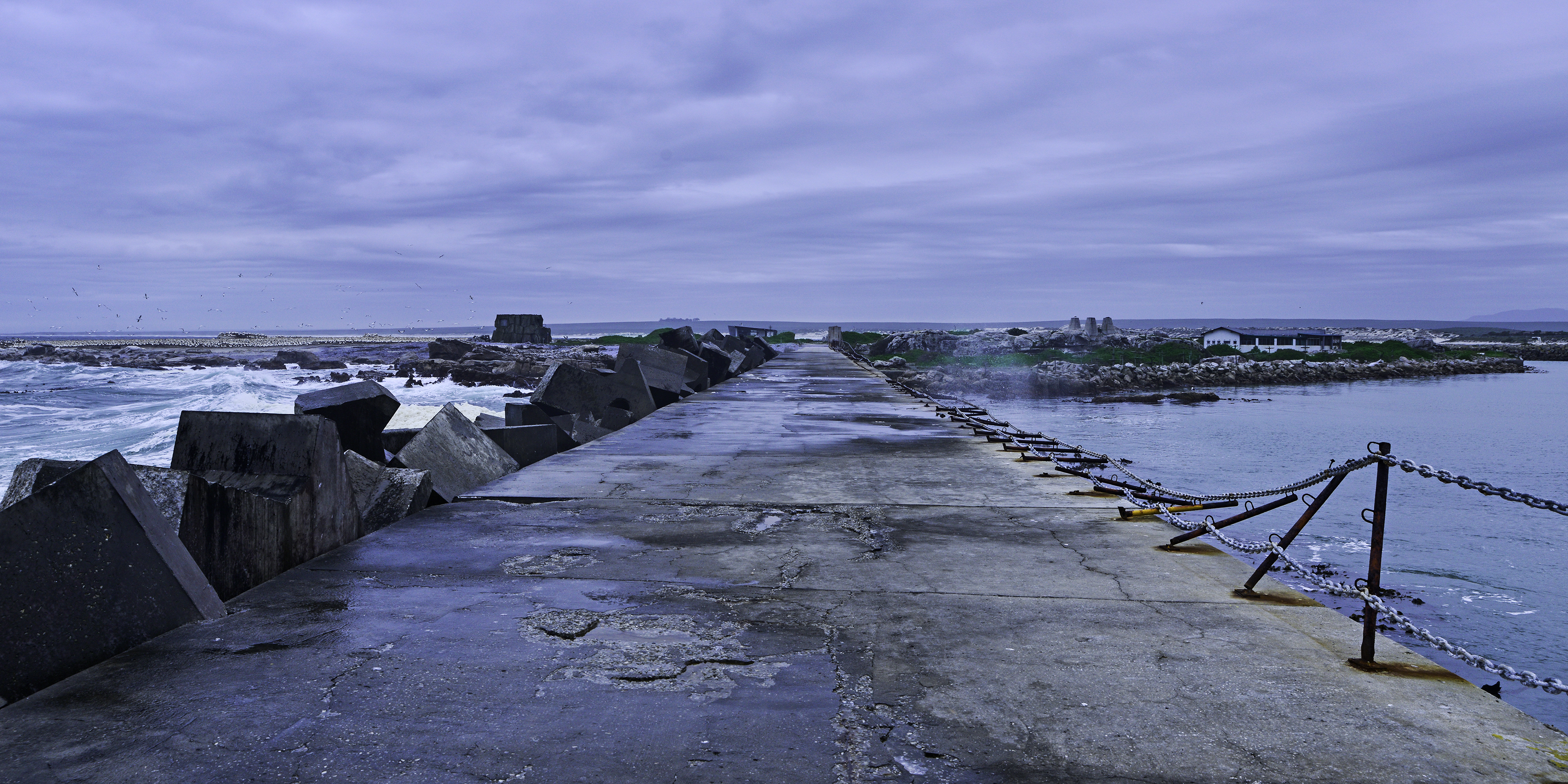
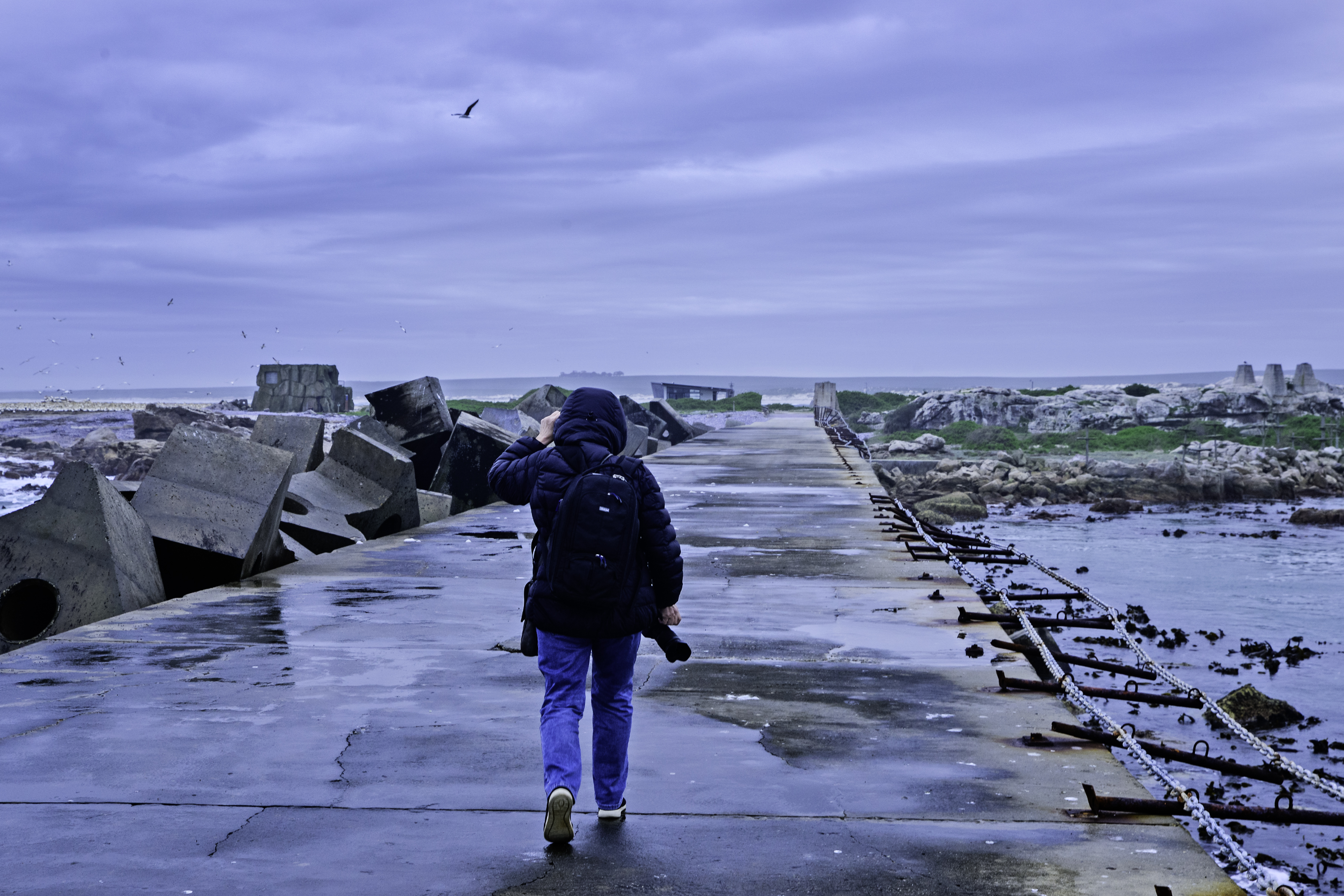
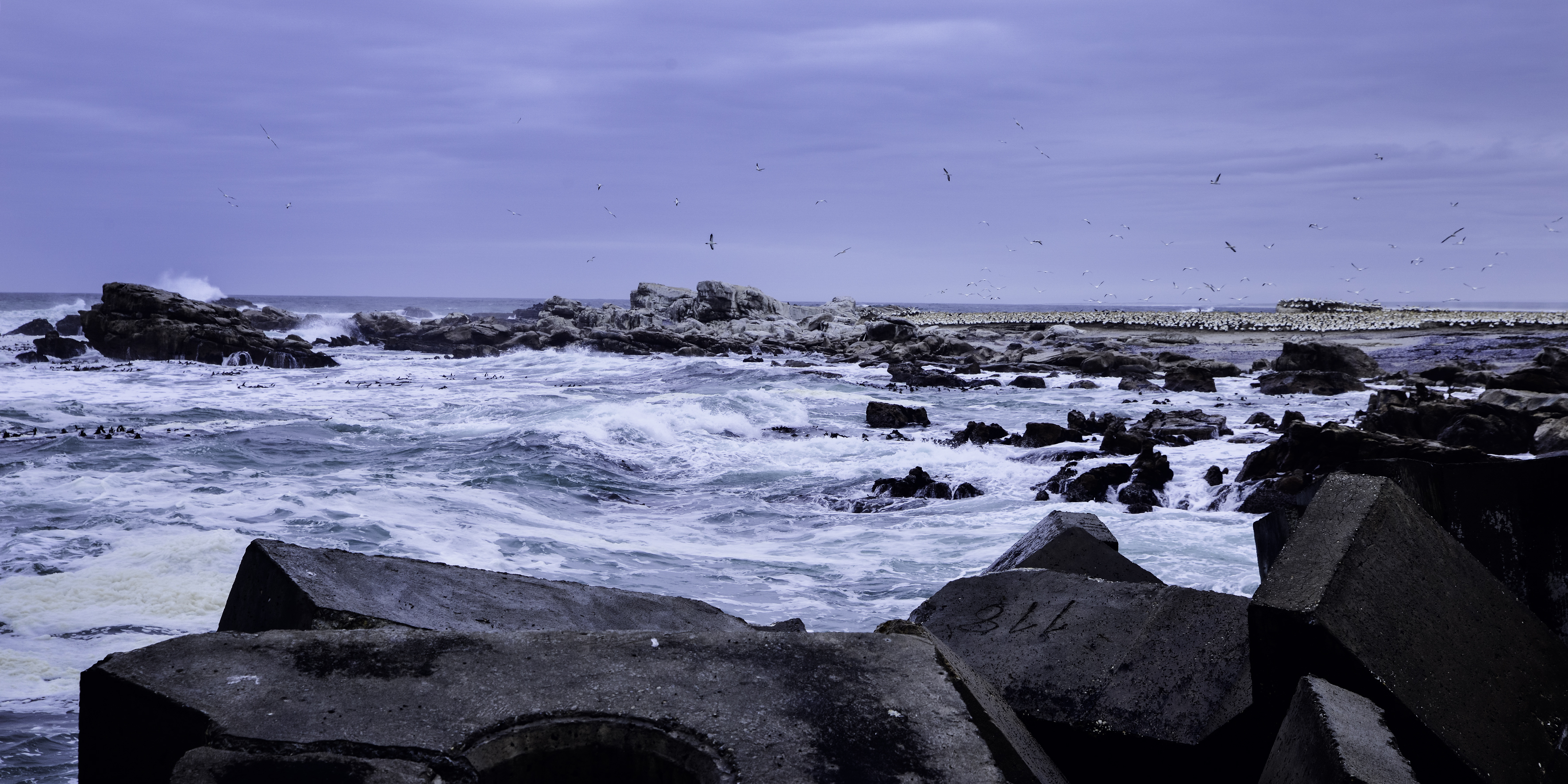
Just 100 metres off the rugged west coast of South Africa, Bird Island sits like a tiny kingdom of feathers and waves. Connected to the mainland by a harbour wall, the short walk to the island is an adventure in itself. The ocean puts on a dramatic show, crashing against the dolosse lining the breakwater—a humbling reminder of nature’s relentless power. On calm days, the stroll is a breeze. On rough days? Let’s just say you might rethink your life choices halfway across.
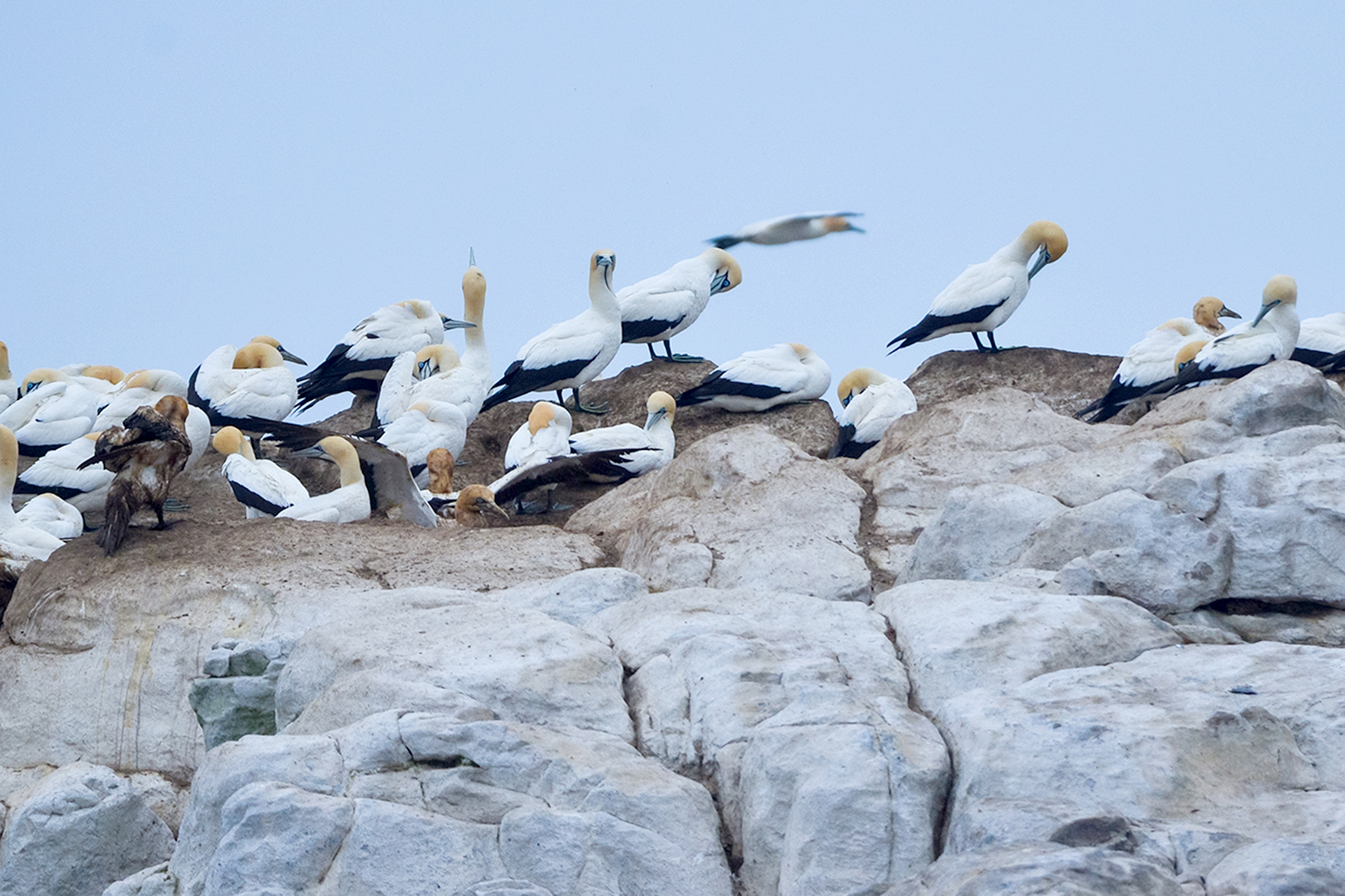
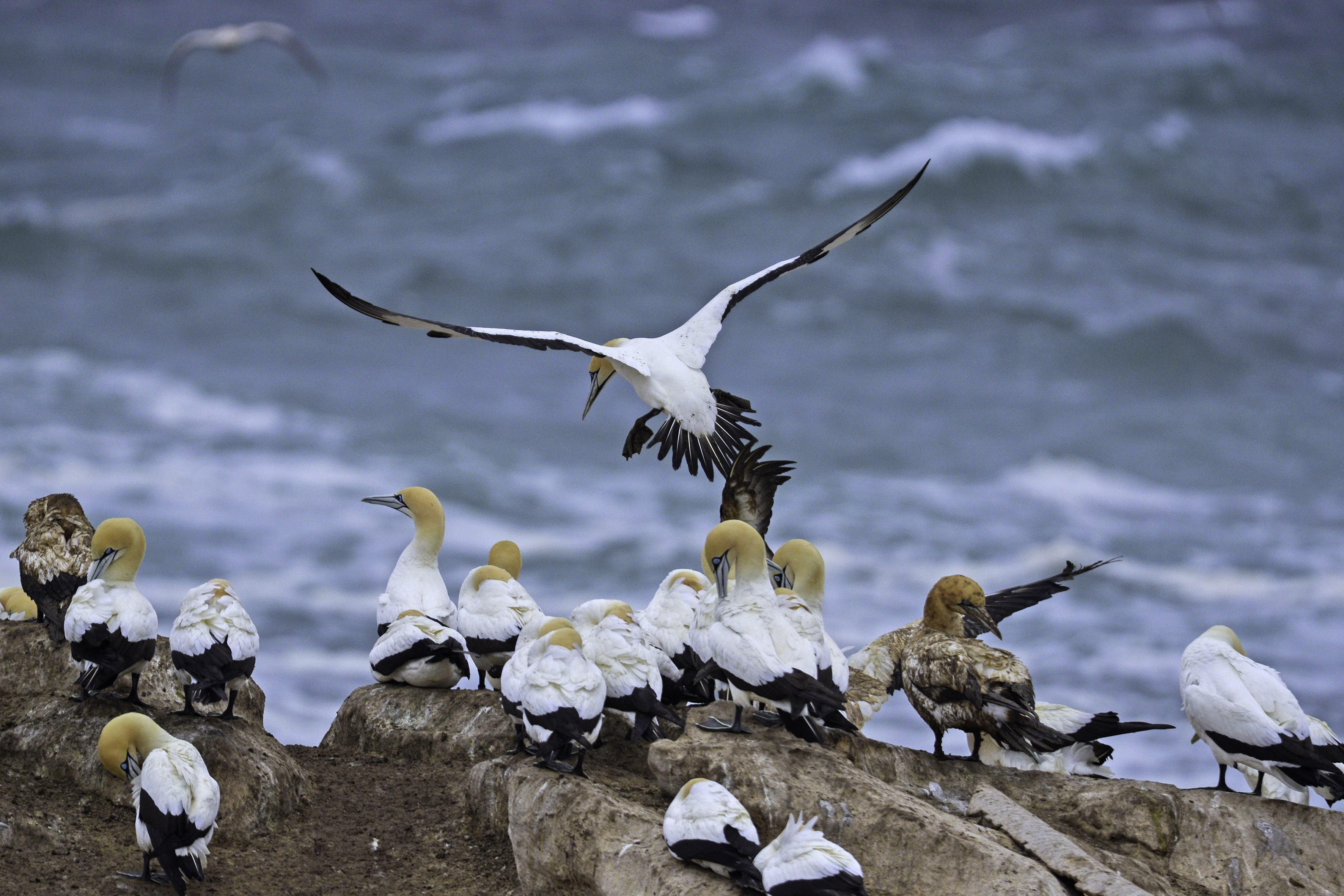
Bird Island is one of only six sites worldwide where Cape Gannets breed, and it’s the only one easily accessible to the public. This makes it a true paradise for bird lovers and nature enthusiasts alike. But gannets aren’t the only feathery residents—other seabirds also call the island home, using it as a crucial nesting and roosting site.
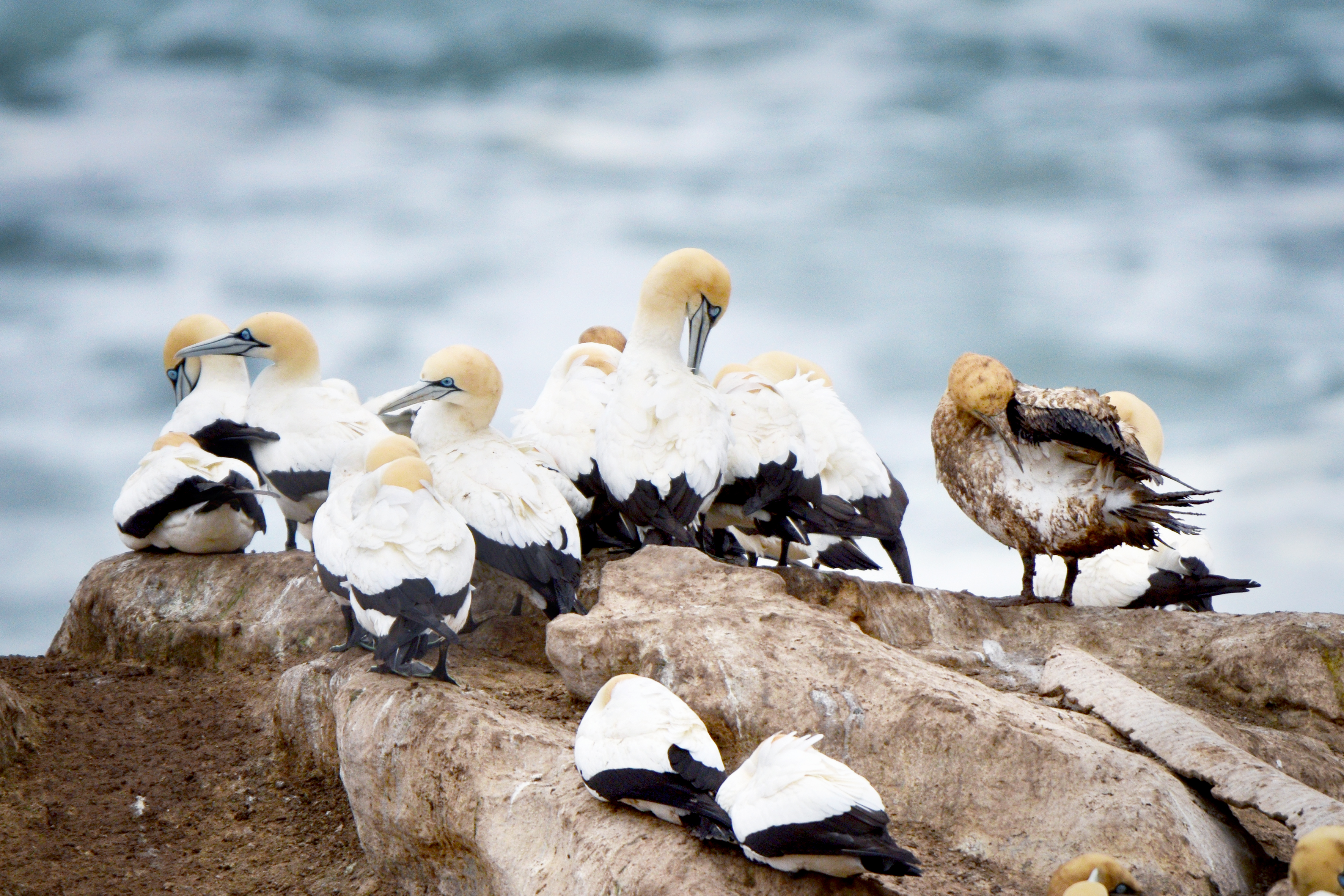
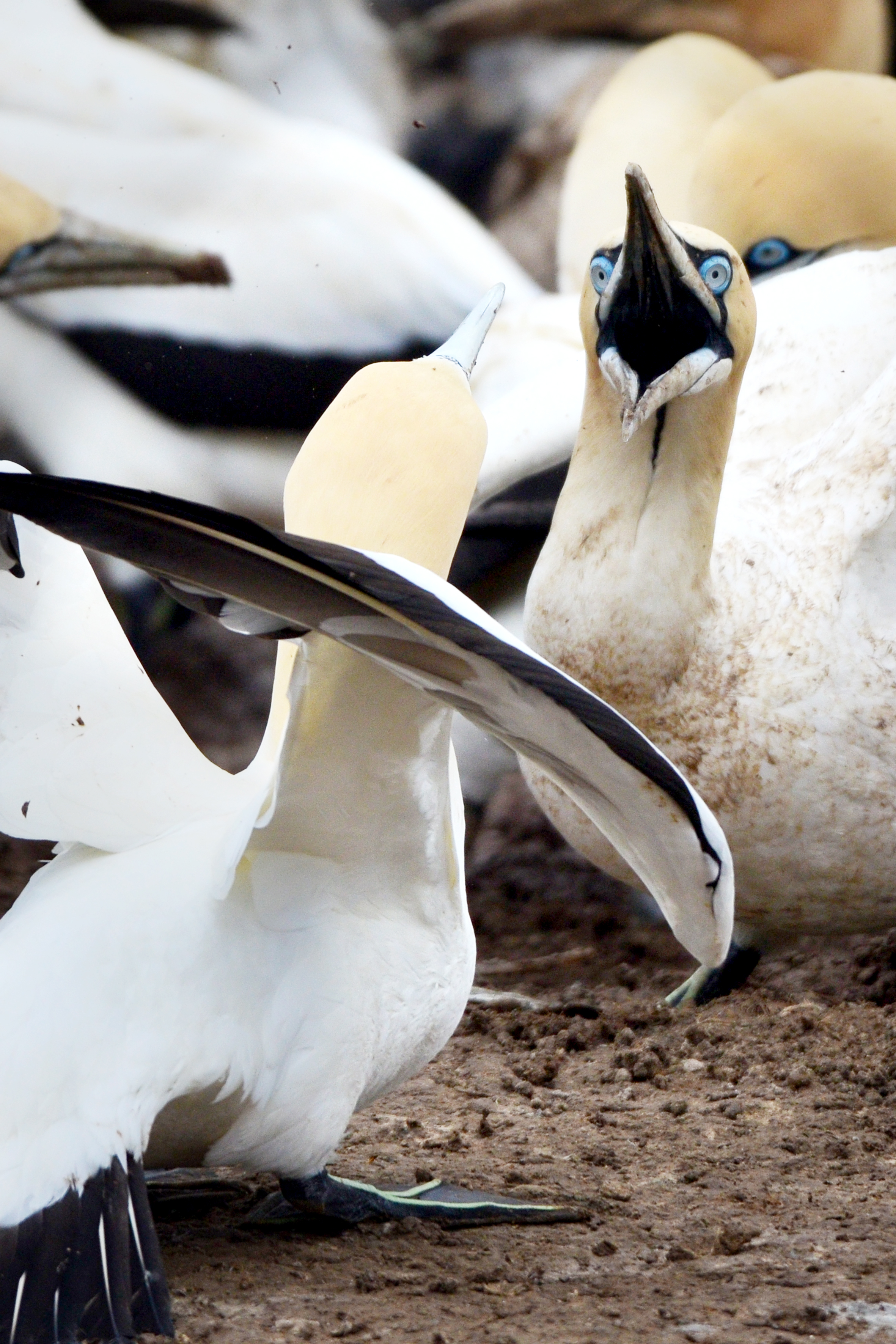
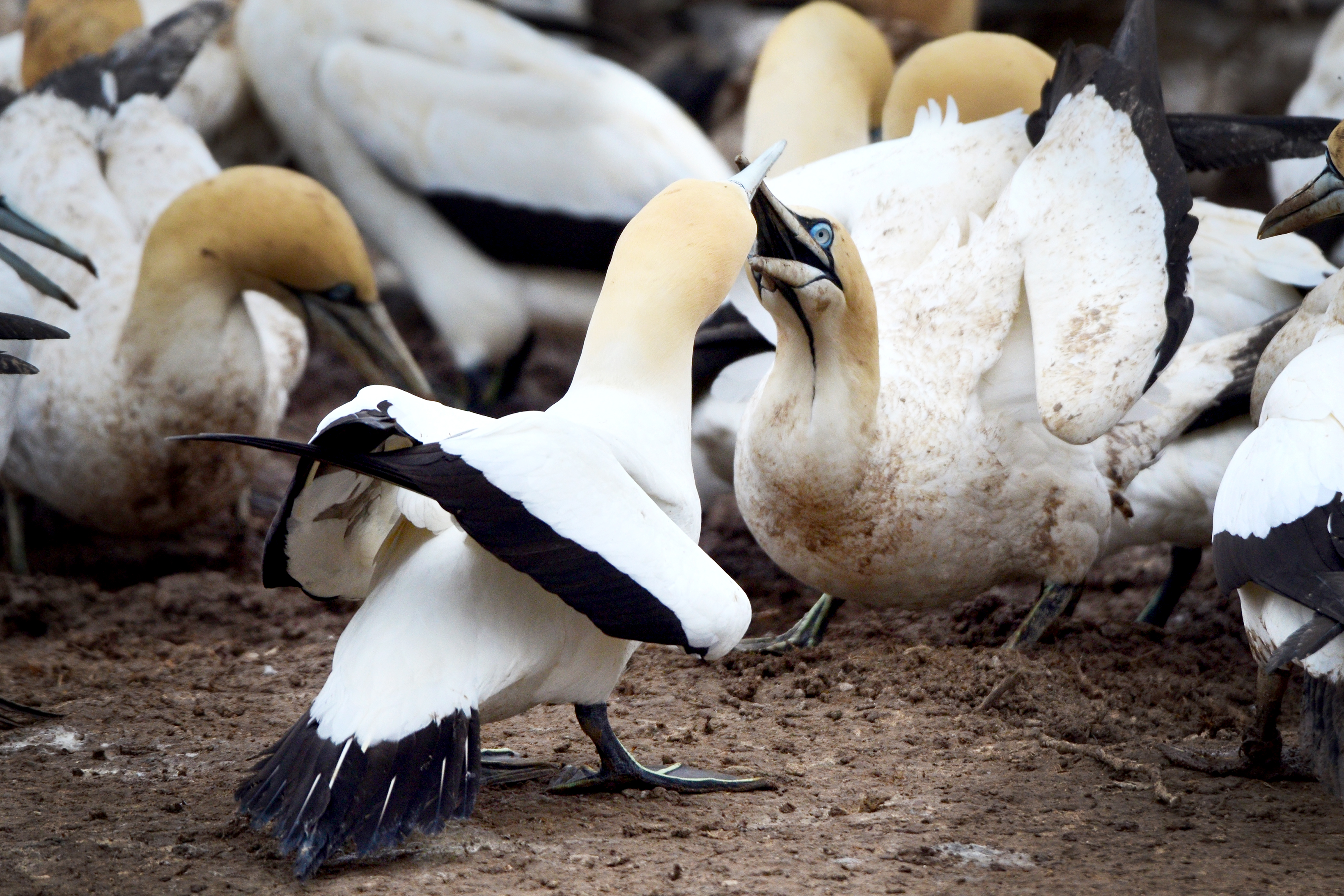
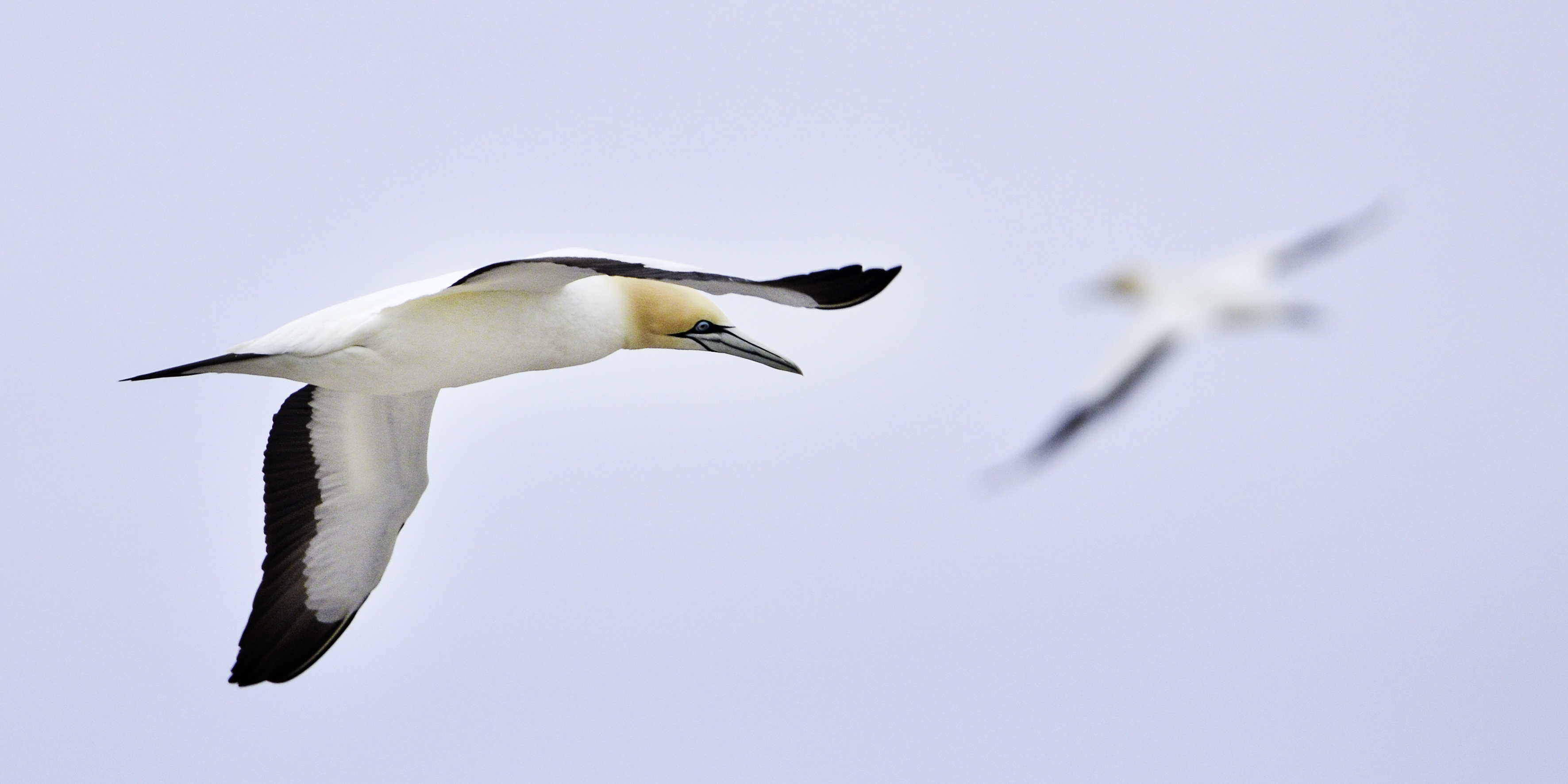
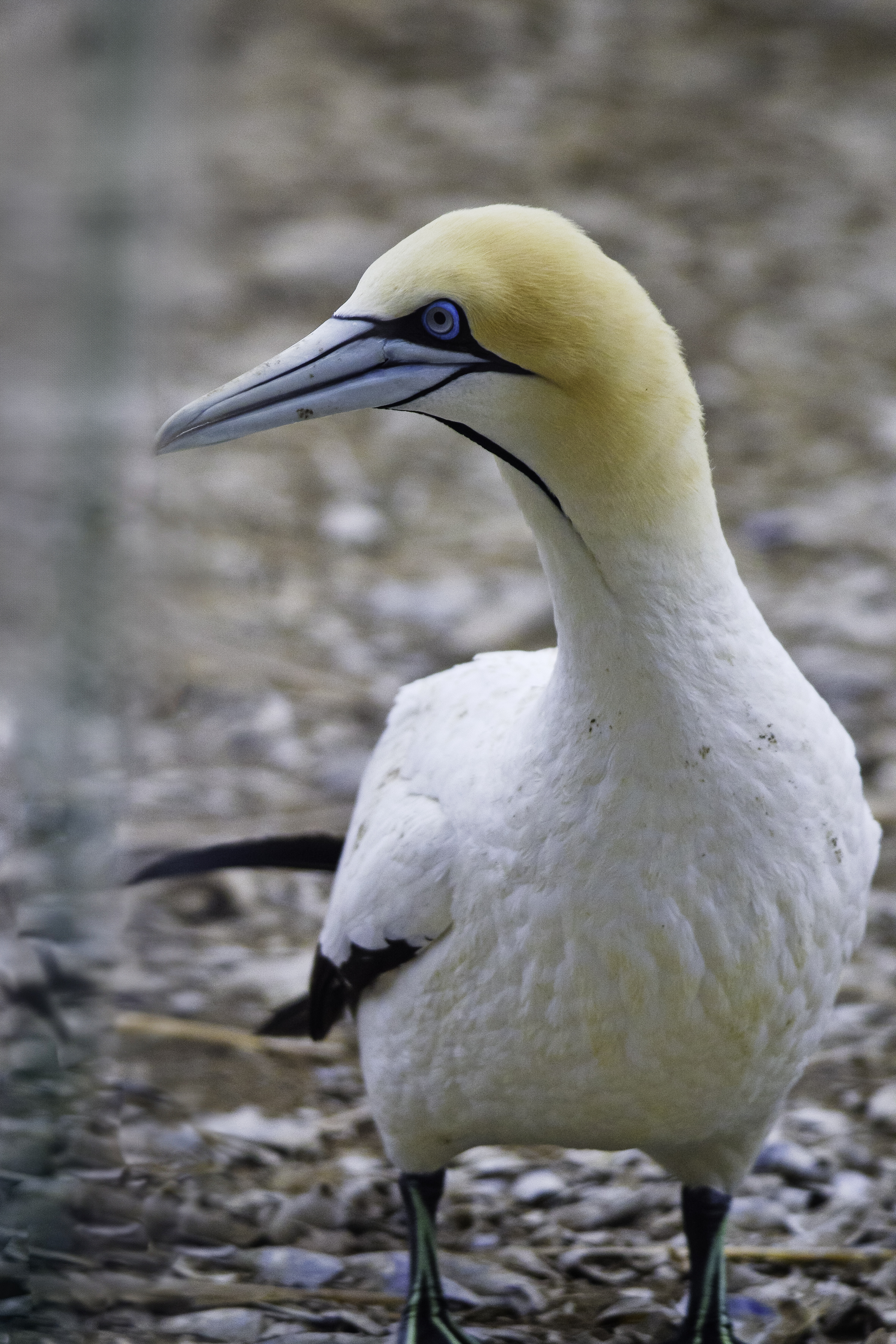
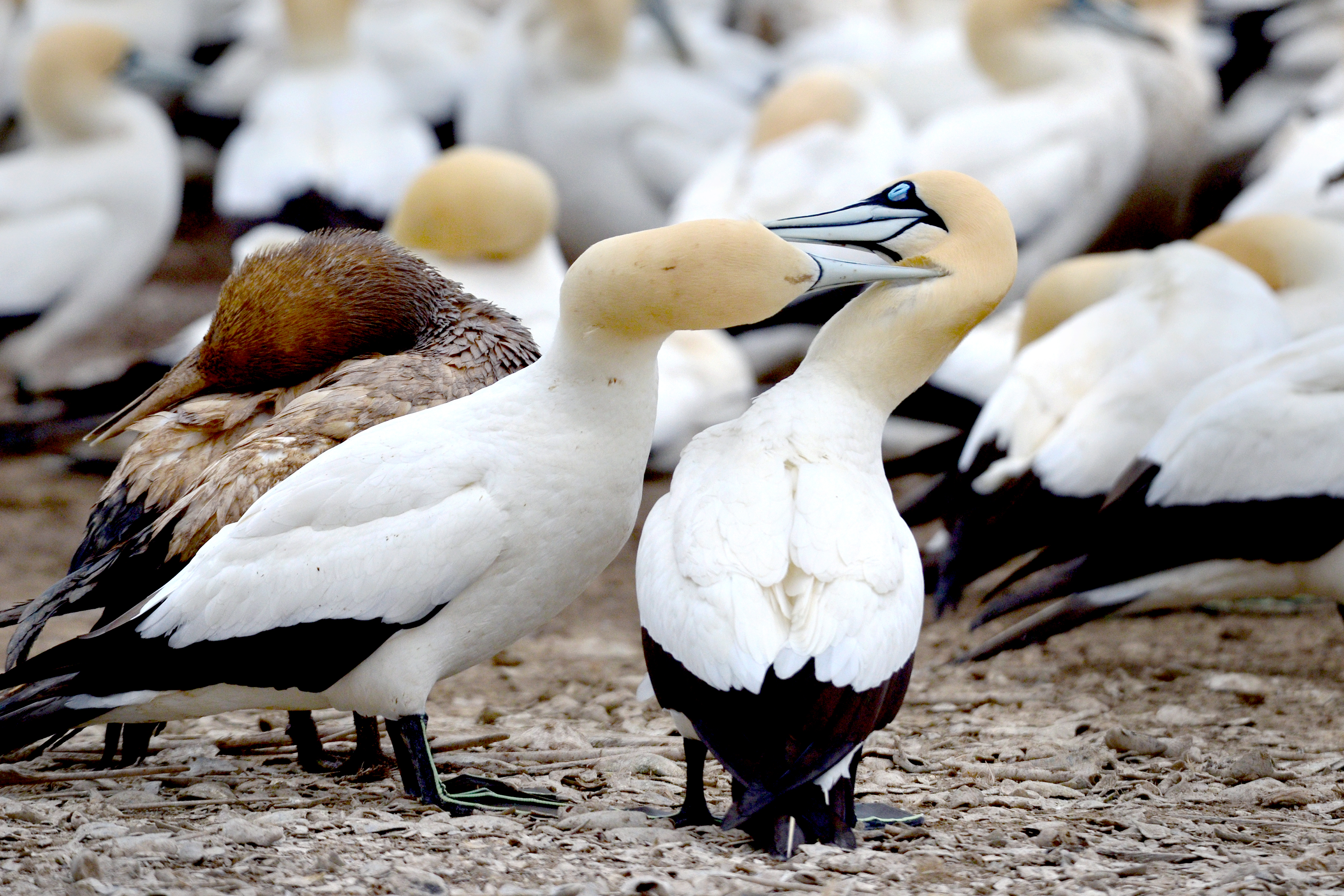
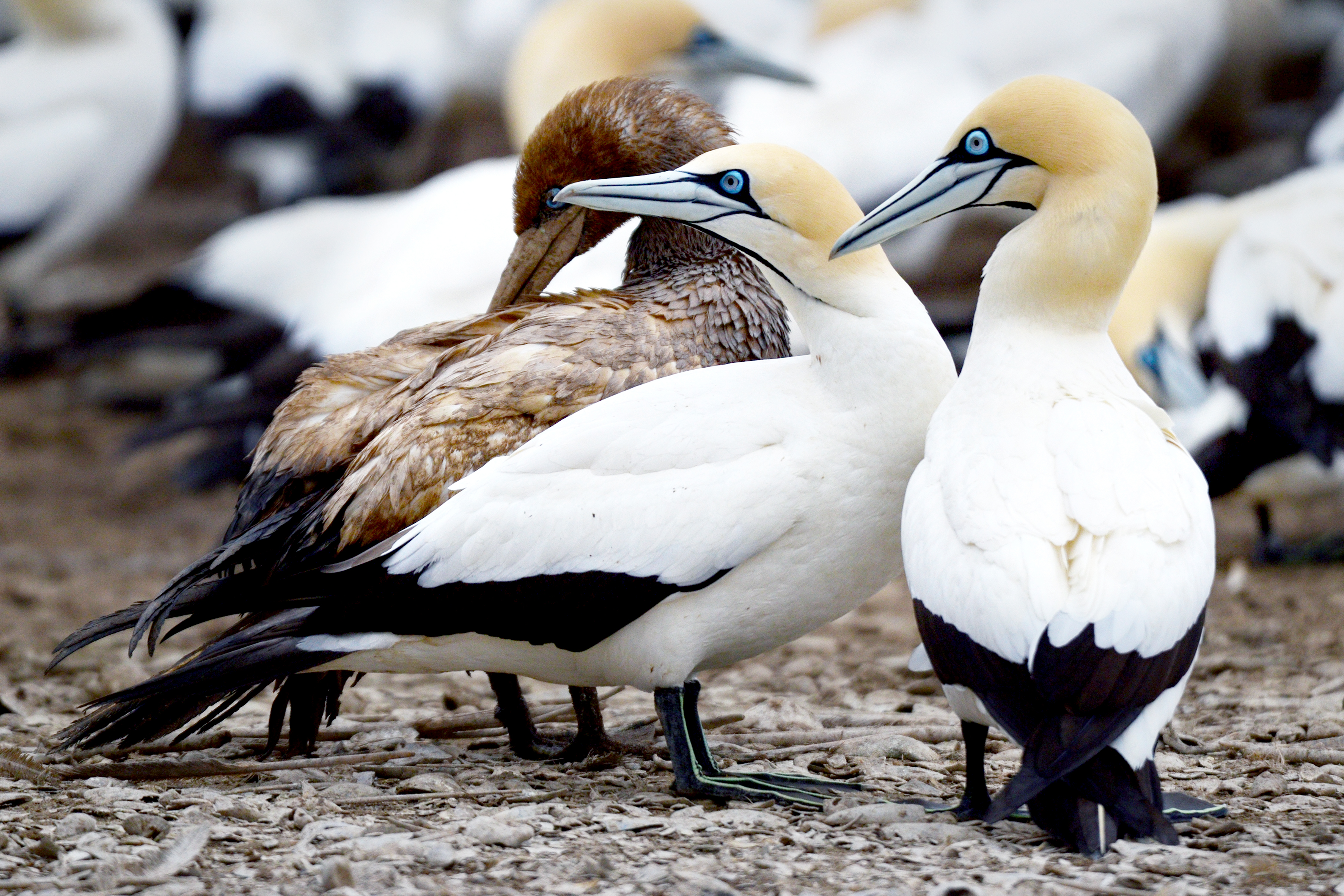
The Cape Gannet is a sight to behold. With striking blue eyes and sleek white plumage, they have an air of elegance—until you see them waddle around or squabble over prime nesting real estate. Life in a gannet colony is anything but peaceful. Packed together in their thousands, they bicker, jab, and argue over personal space, which, frankly, doesn’t seem to exist here. Takeoff is another challenge. With their long wings, gannets need a runway to get airborne. To avoid awkward collisions, they’ve developed a polite little gesture called “sky-pointing”—stretching their necks and beaks skyward to signal their peaceful intentions.
Gannets are also exceptional hunters, diving into the ocean at speeds of up to 100 km/h to snatch fish. They often hunt in groups, creating a spectacular sight as they plunge into the water like living torpedoes. However, their precision isn’t foolproof—sometimes they collide mid-dive in the chaos of the hunt.
They are monogamous and mate for life, strengthening their bond through an elegant courtship dance known as “fencing,” where they cross necks and gently rub bills. This romantic ritual is followed by “allopreening,” where they meticulously groom each other’s feathers. Once the relationship is sealed, they get down to the serious business of nesting. Laying a single bluish-white egg, both parents take turns incubating it using their large, webbed feet—an odd but effective method that helps regulate temperature and keep the egg safe from predators. About 43 days later, a chick hatches, and the proud parents embark on months of tireless feeding. By three months old, the fledgling is off to sea, fending for itself in the vast Atlantic.
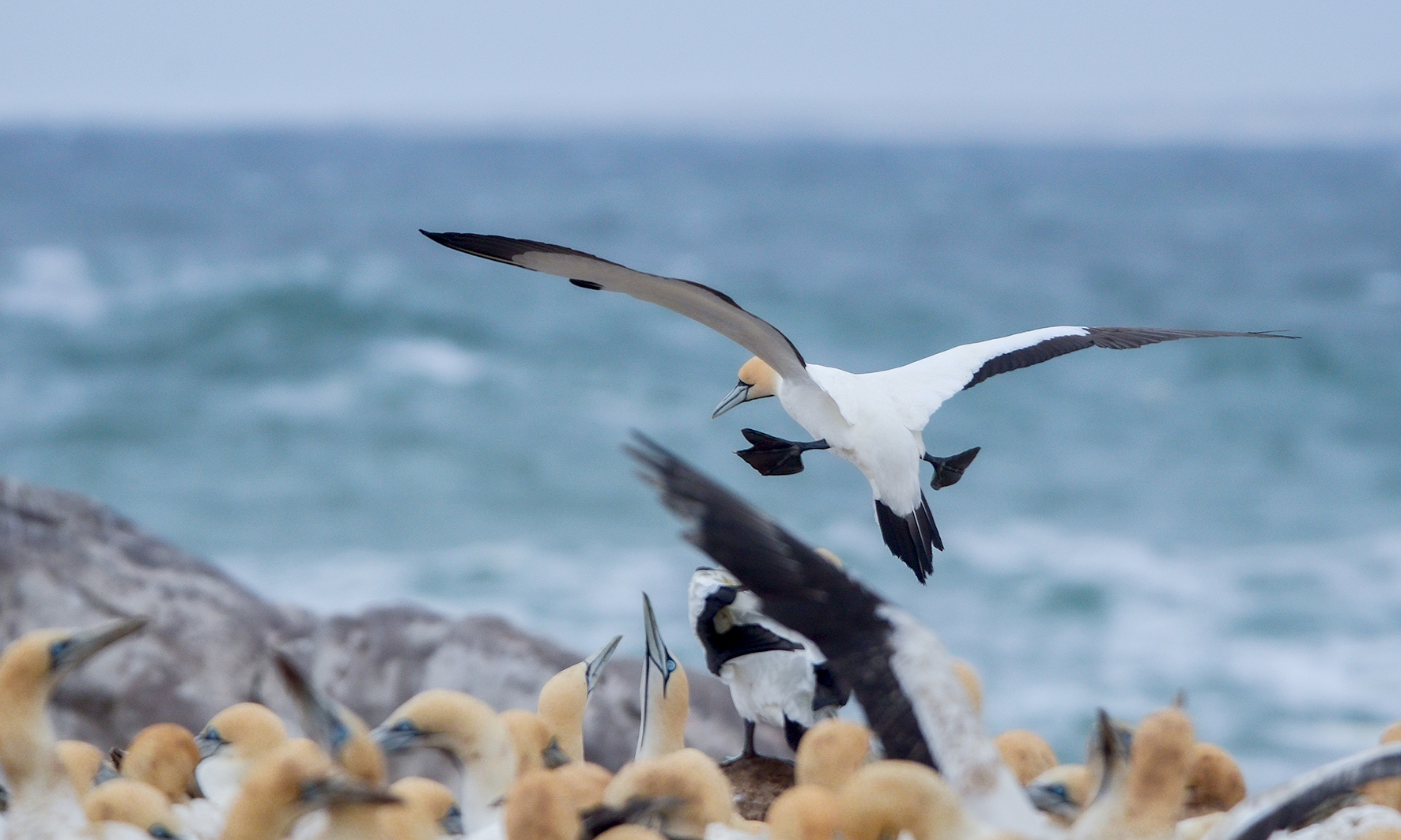
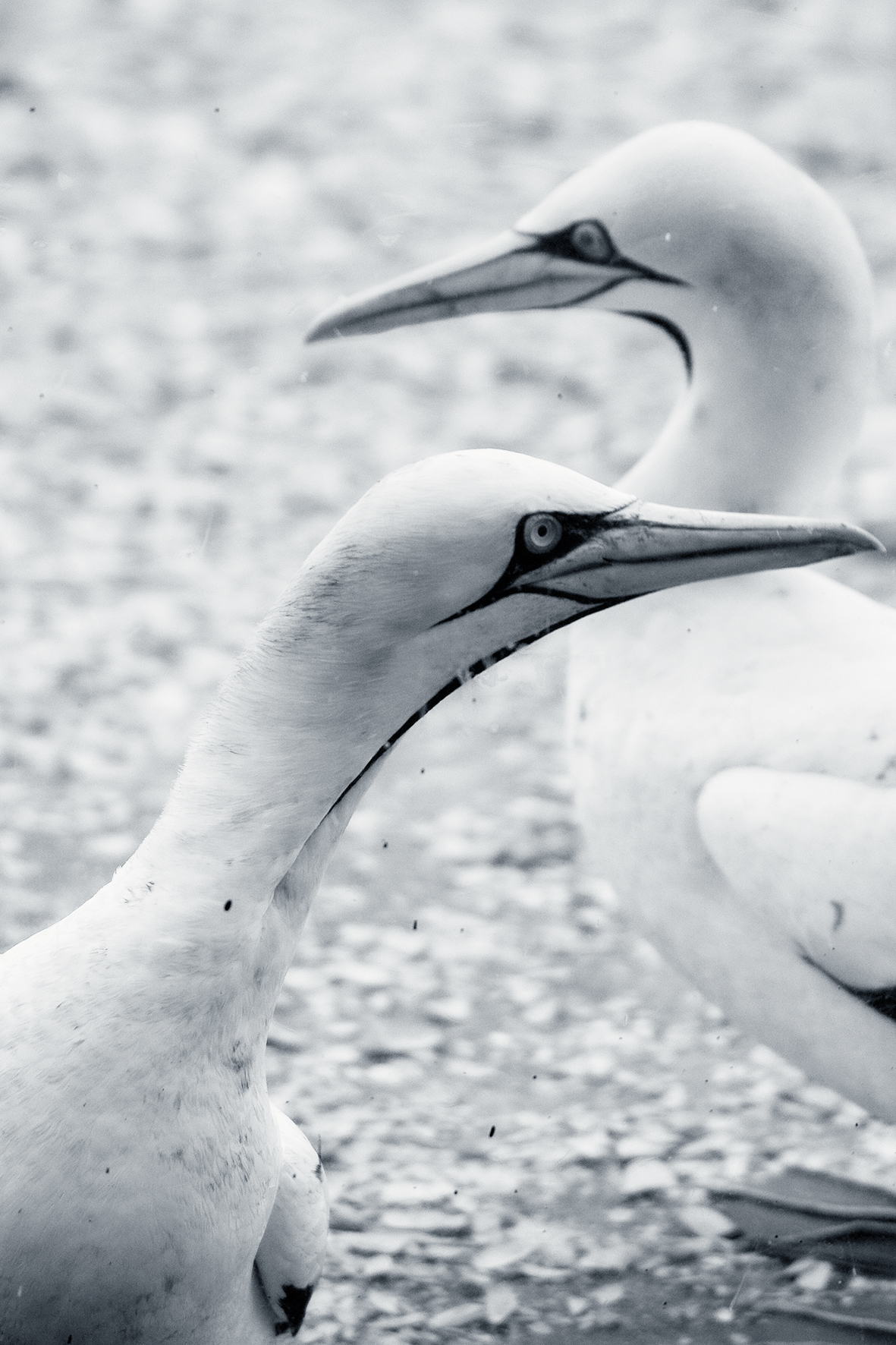
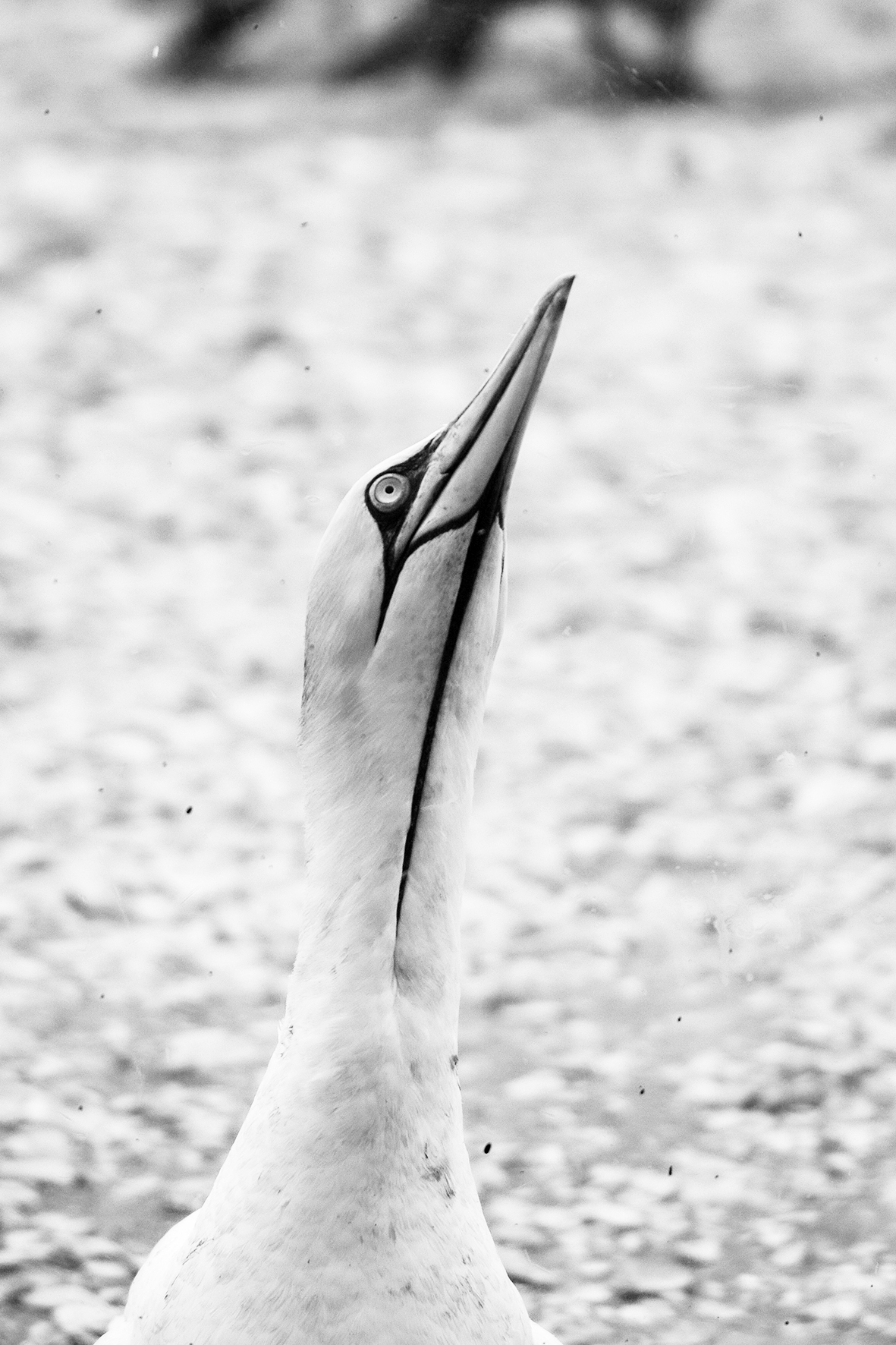
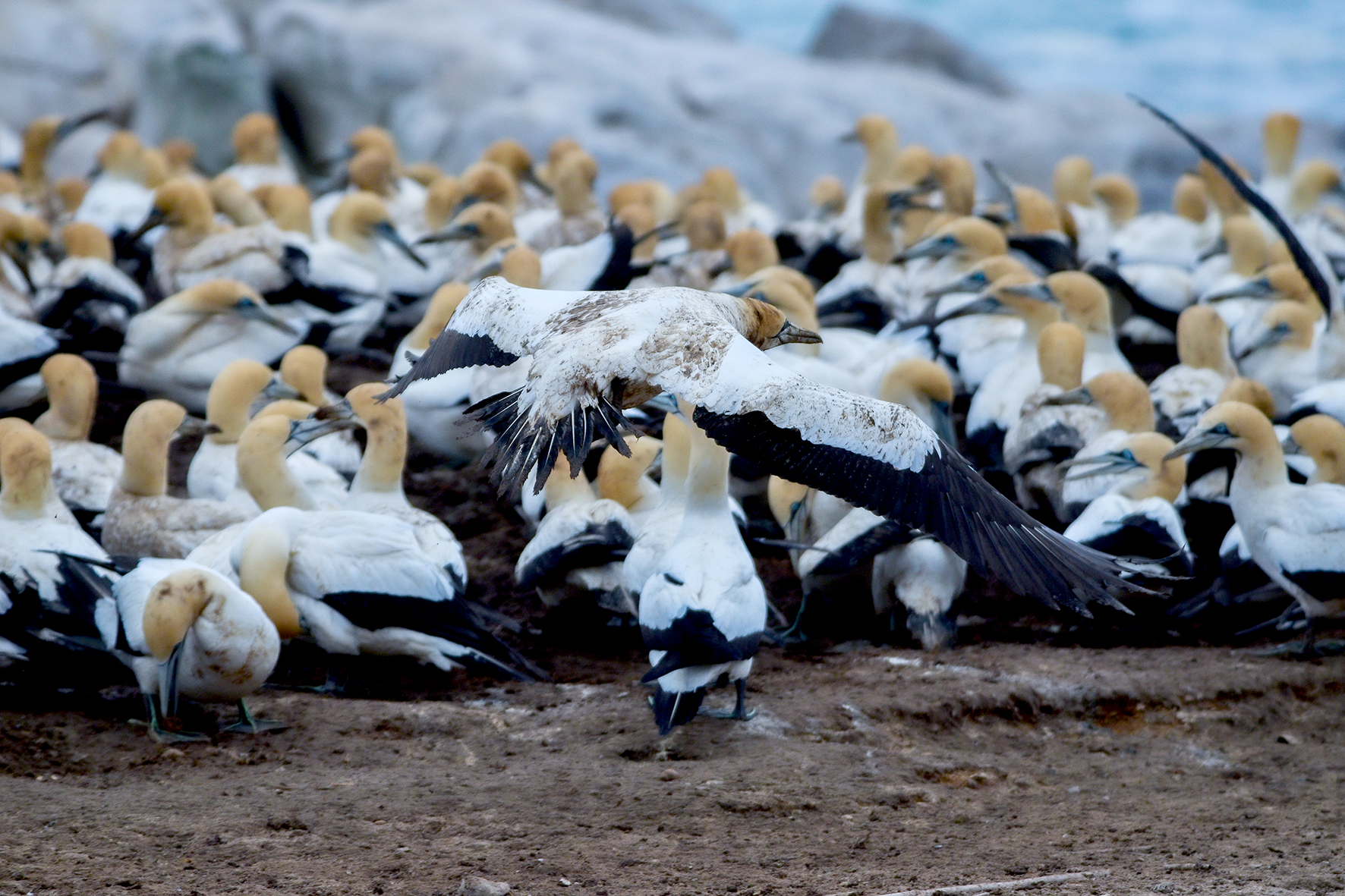
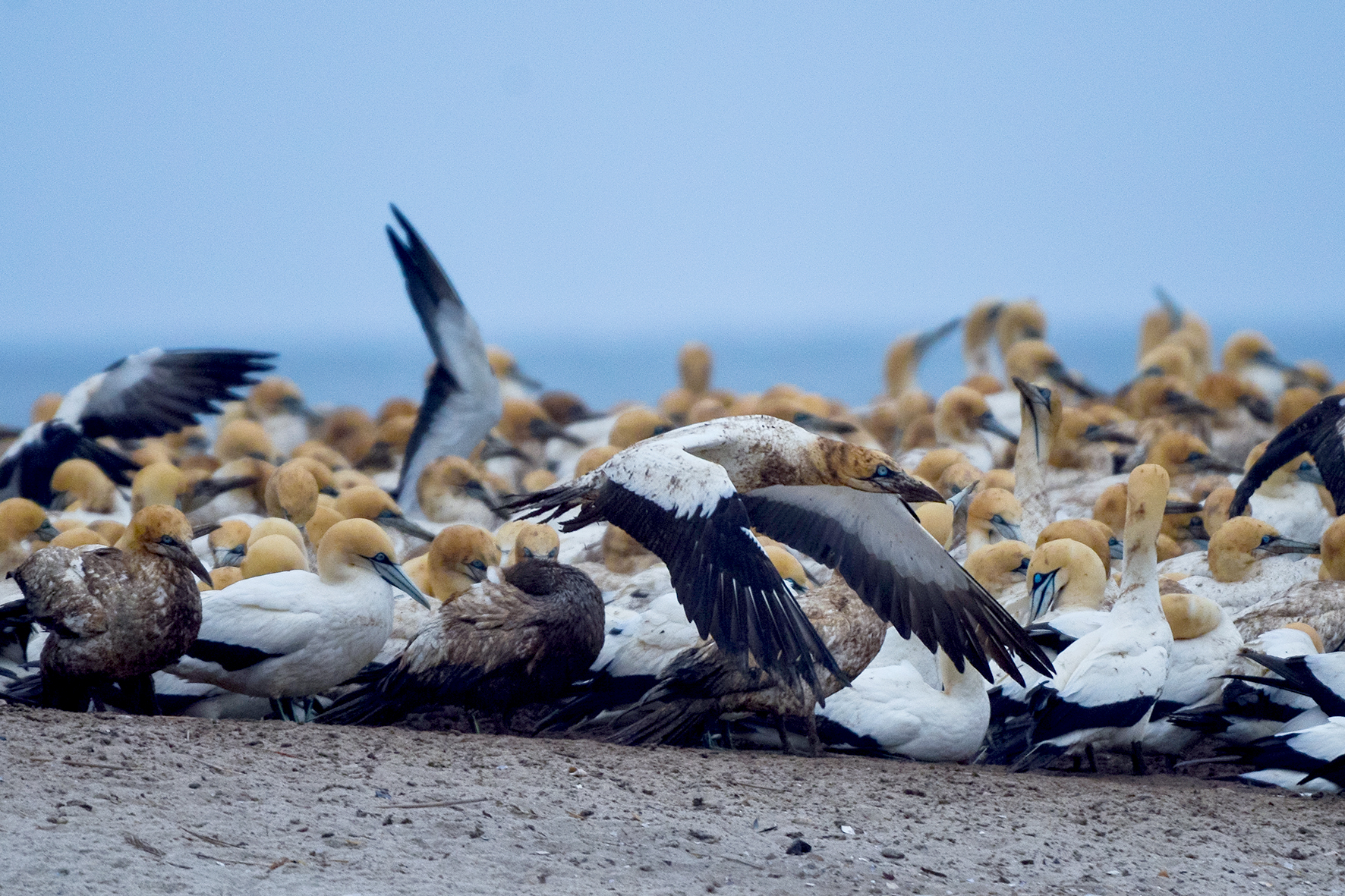
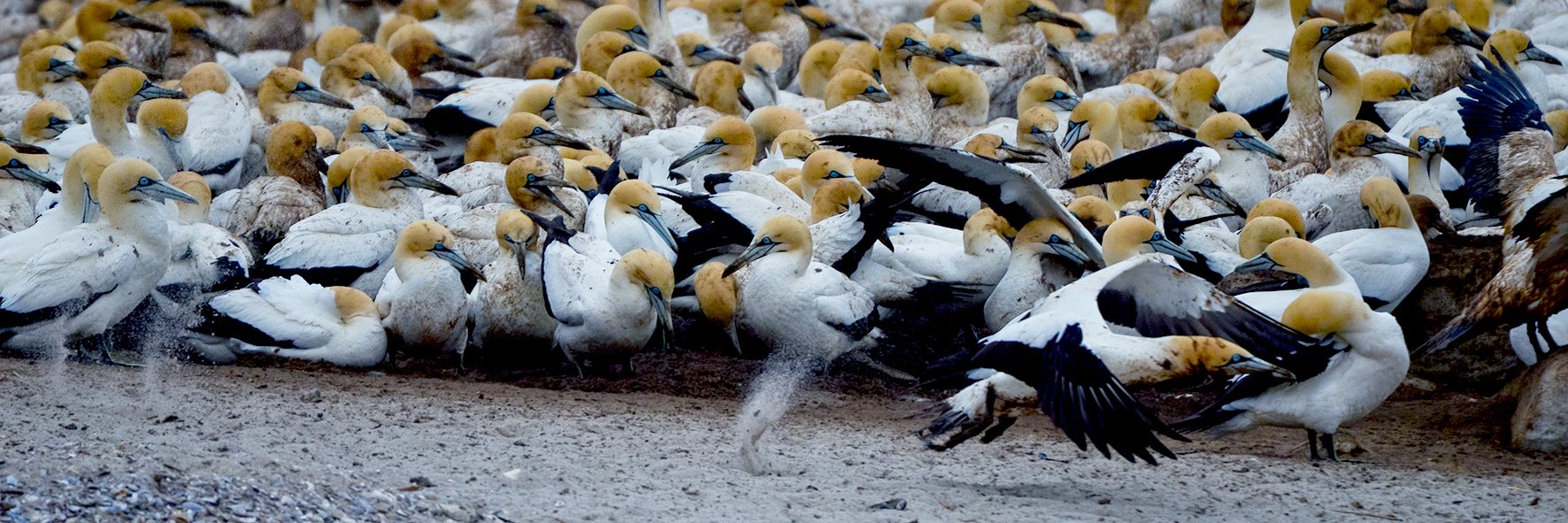
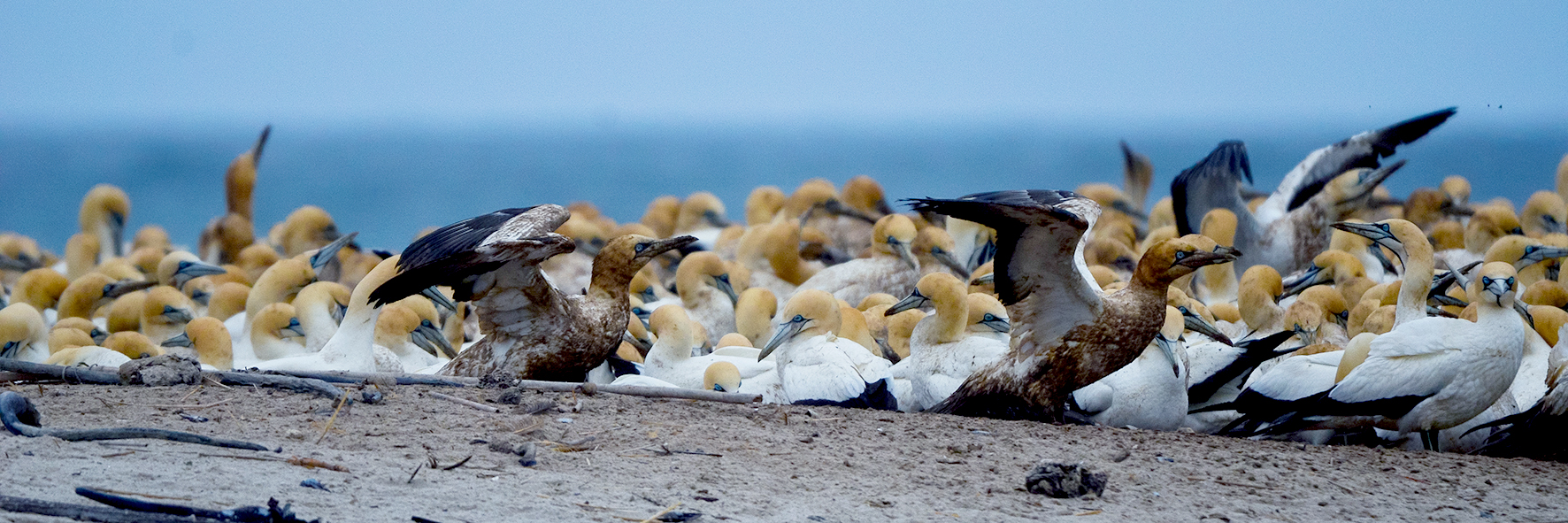

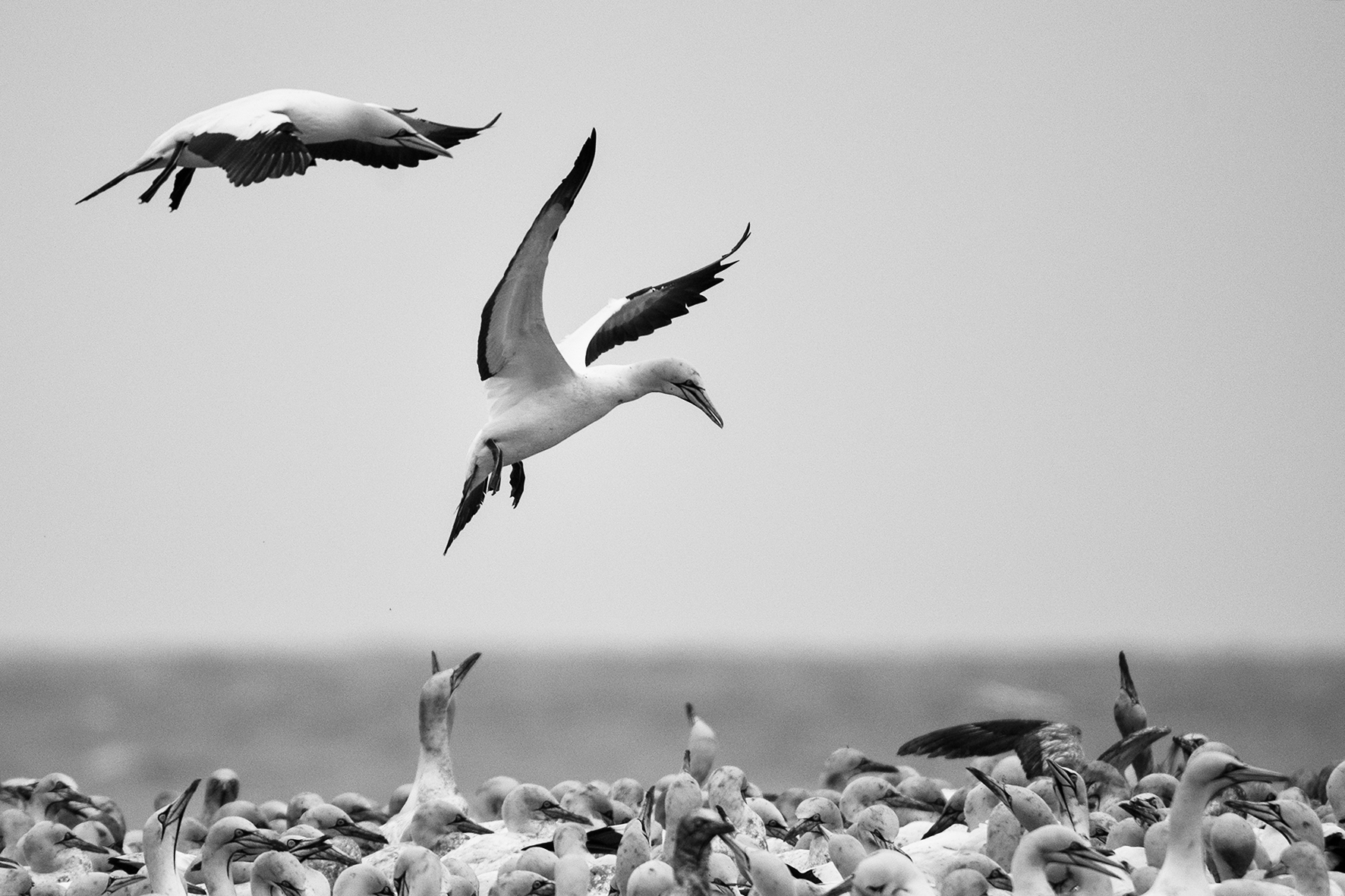
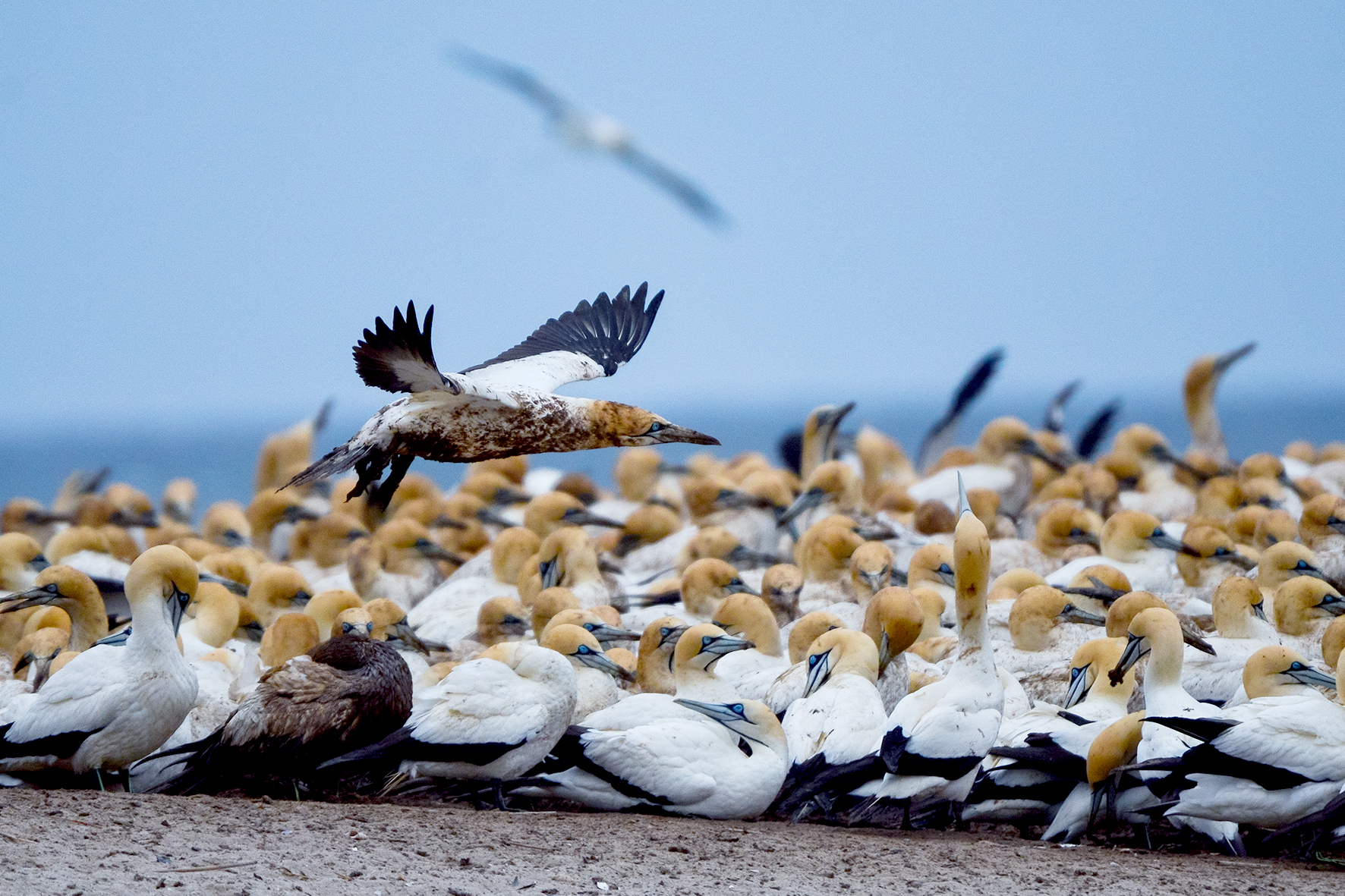
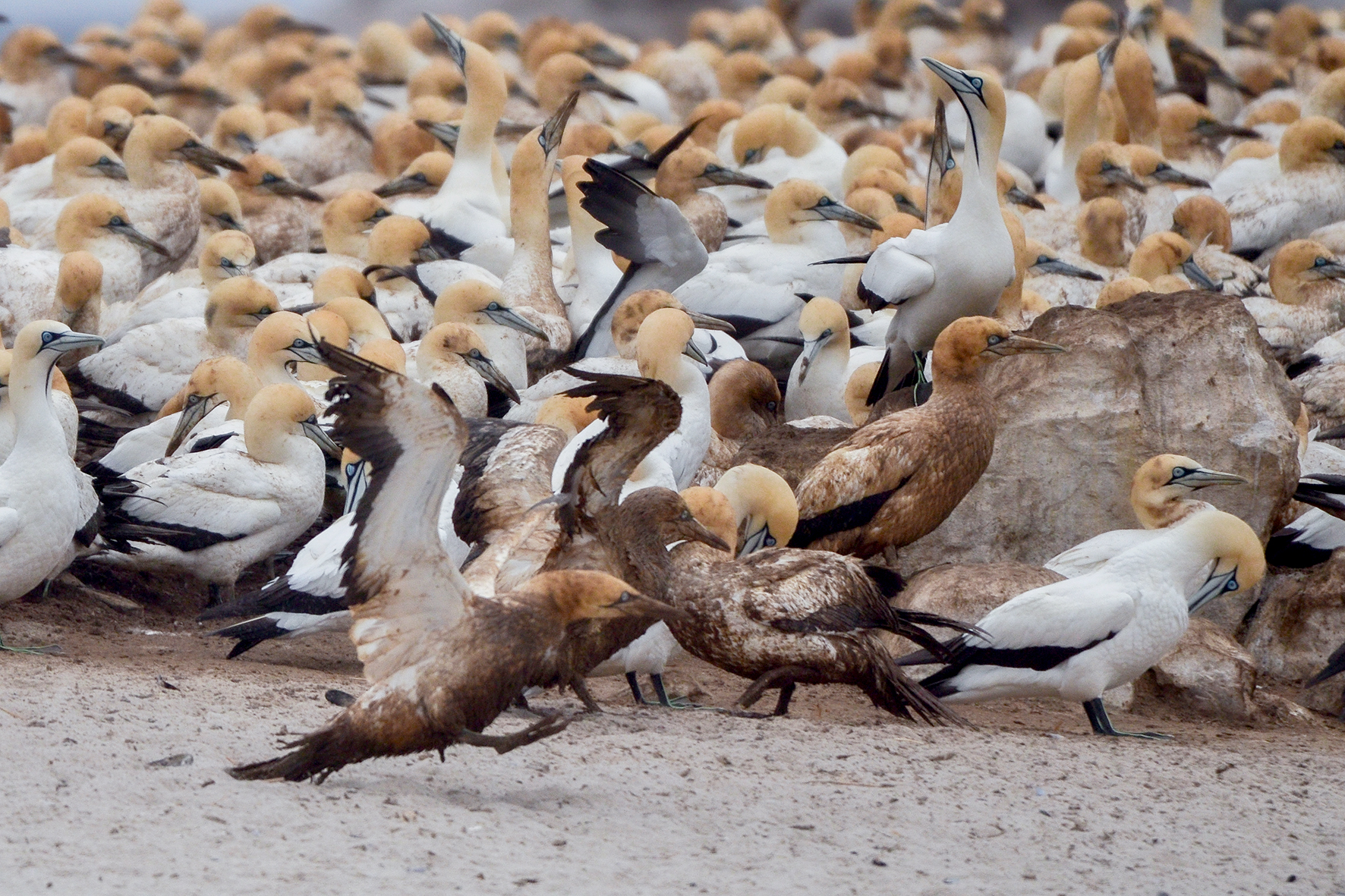
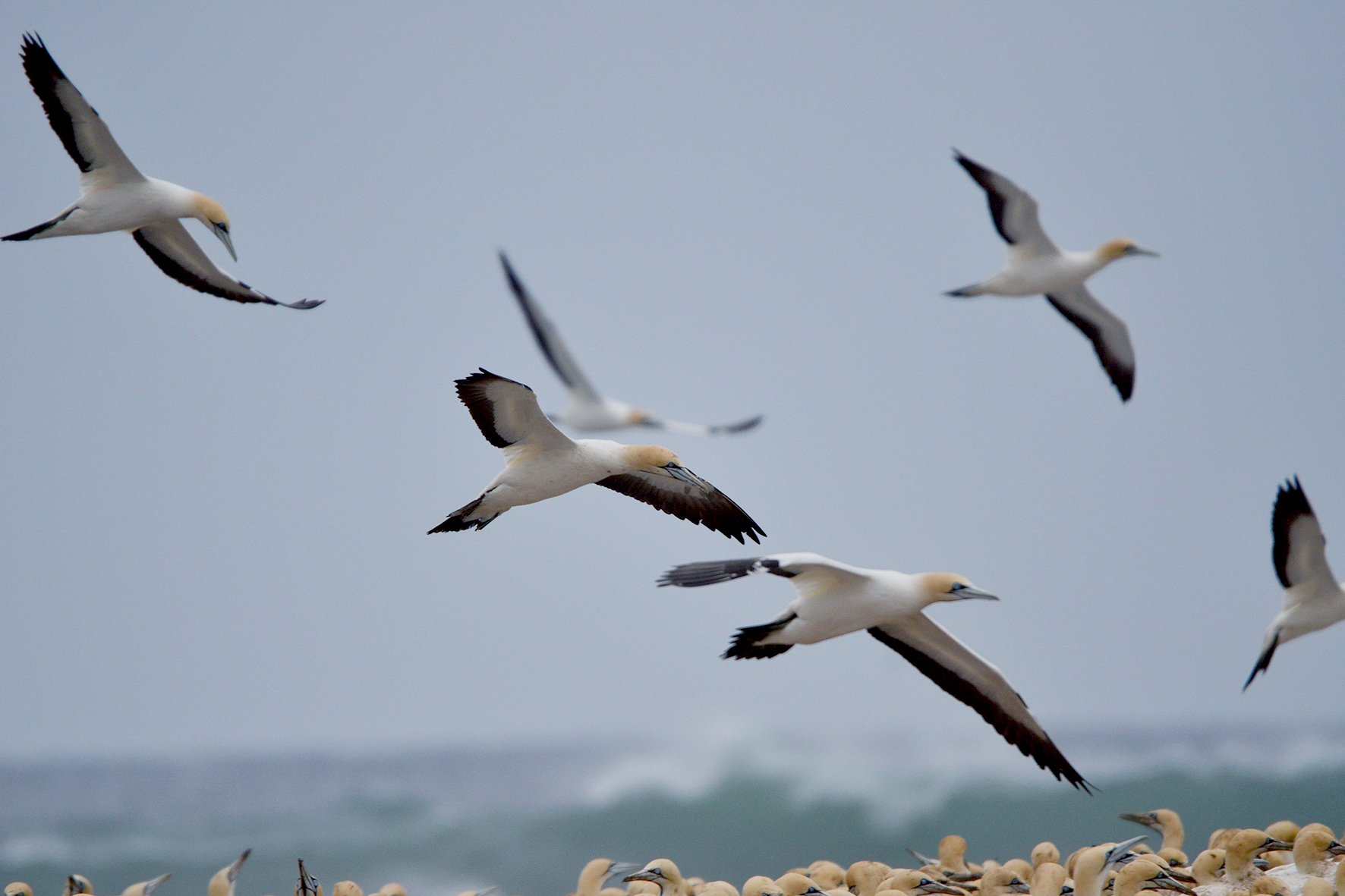

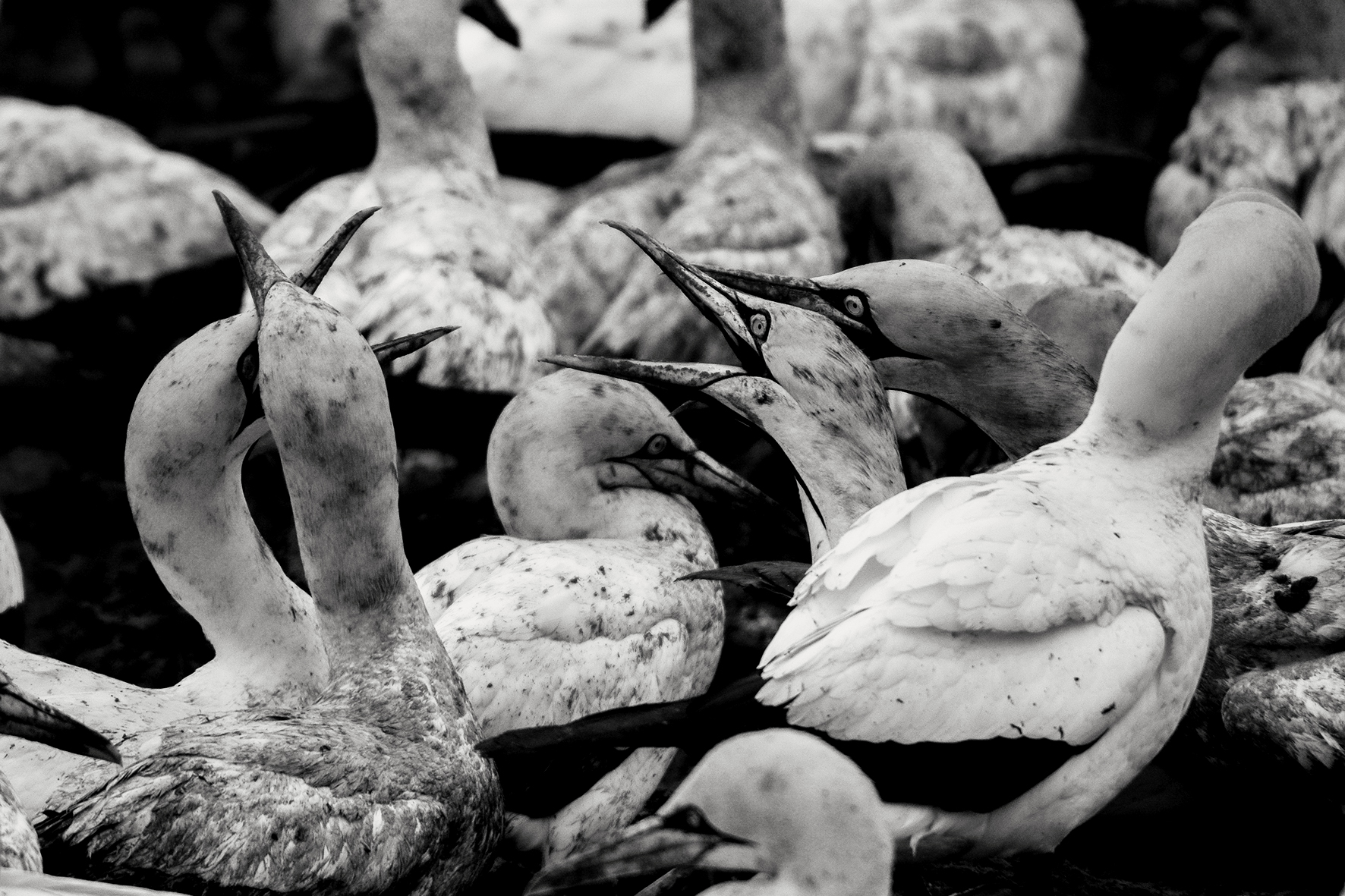
Visiting Bird Island is an unforgettable experience. The gannets keep you entertained with their quirky dances and constant chattering. From the hide, you can watch them soar past at thrilling speeds—sometimes leaving “souvenirs” in their wake, so watch your head! Down below, they come right up to the glass, pecking at it and putting on an impromptu show for visitors.
But Bird Island isn’t just about the birds. The museum, aptly named The Bonebox, provides a fascinating look into the region’s marine life. Here, visitors can view skeletons of various sea creatures, including a Cuvier’s beaked whale, a Cape fur seal, and a dusky dolphin. Polly, a life-sized model of a southern right whale, looms impressively, making sure you don’t forget just how massive these ocean giants are.
Exploring the island is a sensory treat. Walking along paths made of crushed shells, you’ll hear them crackle underfoot as you soak in the raw beauty of this coastal gem. But getting to the island isn’t always straightforward. When the sea is rough, the breakwater becomes a treacherous gauntlet, with waves crashing over it violently. On my last visit, I saw firsthand how the ocean had flattened the boundary chain, nearly sending it into the harbour. Walking this path is like straddling two worlds—the wild, untamed ocean on one side and the calm, protected waters of the harbour on the other.
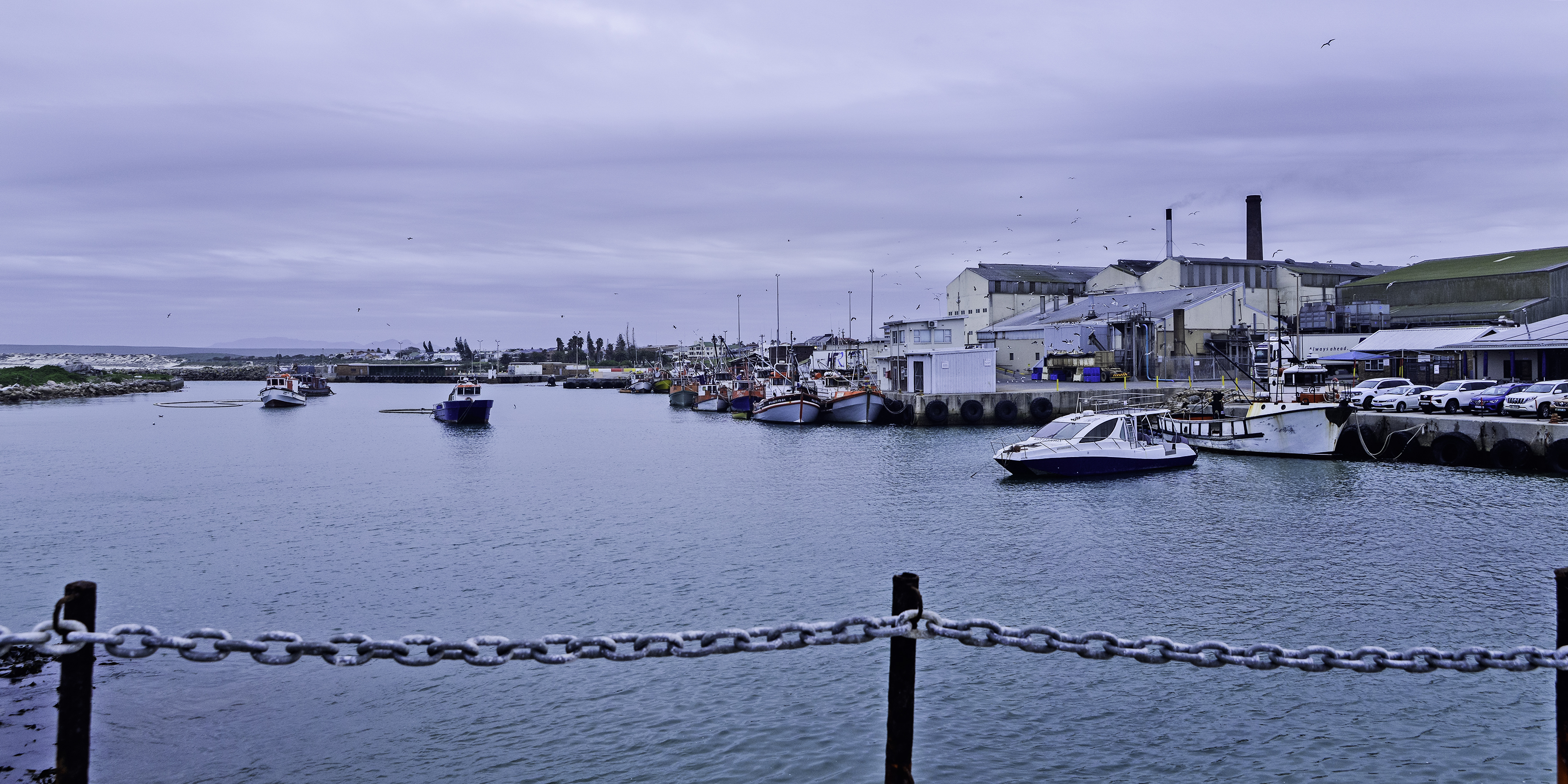


Once you make it across, you’re welcomed by a striking driftwood sculpture of a man—your silent guardian to this seabird sanctuary. To your right, a path leads to the hide and the main gannet viewing area. Straight ahead, you’ll find The Bonebox museum and a scenic trail running along the beach. Be sure to stick to the designated paths to avoid disturbing the breeding birds. To the left, a path winds toward the curio shop, where you can pick up ethically sourced souvenirs to remember your visit.
Bird Island is more than just a birdwatcher’s paradise; it’s a front-row seat to the wonders of nature. Whether you’re an avid birder, a nature photographer, or simply a curious traveller, this wild and wonderful island is well worth exploring. And while the gannets are undoubtedly the main attraction, don’t forget to keep an eye out for playful seals and the ever-watchful cormorants. Bird Island is a place where nature reigns supreme—and it’s ready to leave a lasting impression.
Sources:
CapeNature: Lambert’s Bay Bird Island Nature Reserve


