


Electric City: Photographing Cape Town’s First E-Prix
Photography by Benita van As
On 25 February 2023, the streets of Green Point exchanged their usual rhythm for something altogether faster. The inaugural Cape Town E-Prix brought the ABB FIA Formula E World Championship to South Africa for the first time—and placed the city firmly on the international motorsport stage.
The setting could hardly have been more Cape Town. The 2.921-kilometre street circuit wound around the DHL Stadium precinct, with Signal Hill, Table Mountain and the Atlantic Ocean forming a dramatic backdrop. Twelve fast, unforgiving turns carried the cars along Vlei Road, Beach Road and Fritz Sonnenberg Road, transforming familiar city streets into one of the quickest circuits on the Formula E calendar.

There was a particular kind of anticipation in the air. Cape Town is accustomed to large sporting events, but this felt different. The cars did not arrive with the familiar roar of combustion engines. Instead, there was an electric whine, the sudden rush of tyres and then, almost before the camera could follow, they were gone.
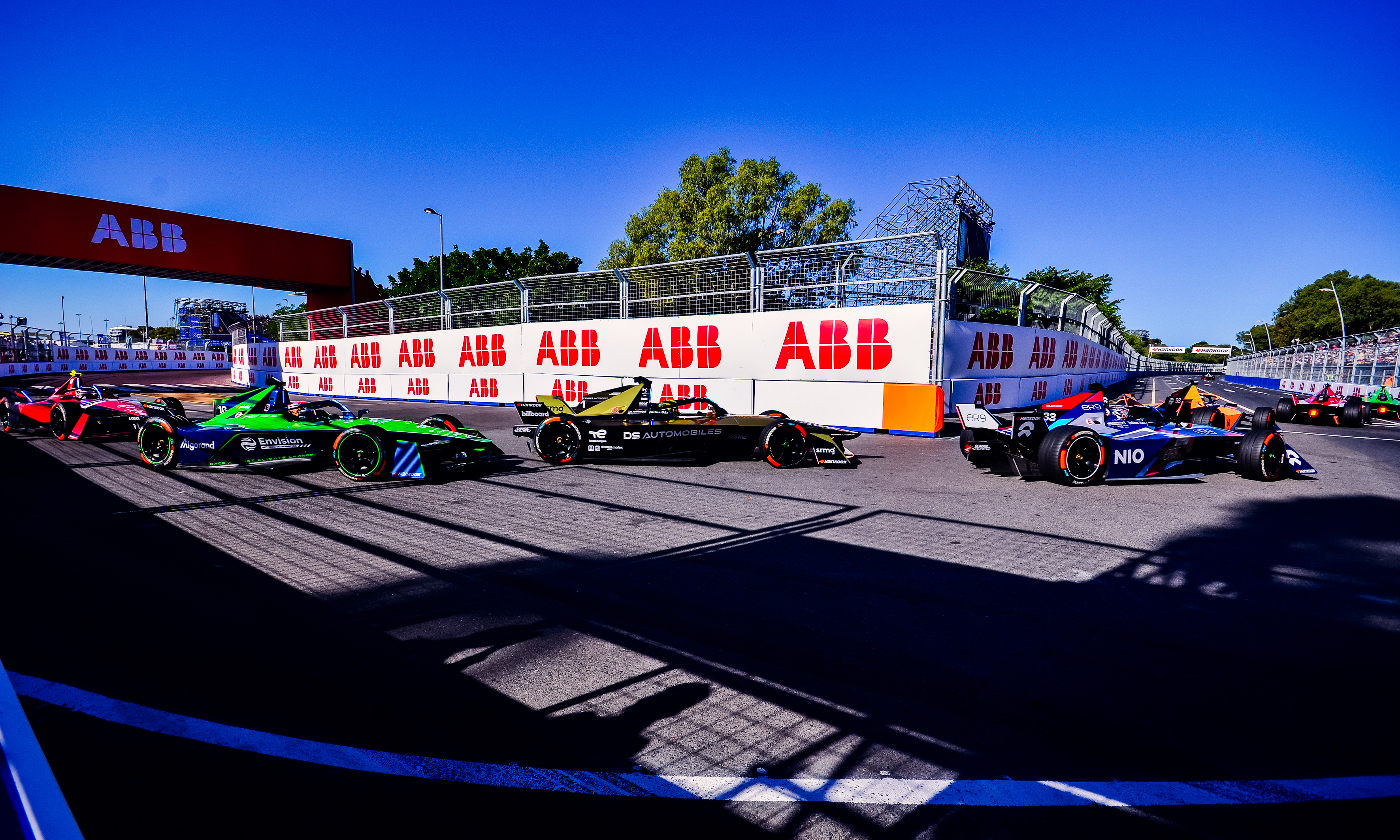
Photographing motorsport requires a different way of seeing. Everything happens at speed, but the photograph still needs intention. There is little time to reconsider a composition or wait for a moment to repeat itself. The challenge lies in anticipating where the car will enter the frame, following its movement and finding a fraction of a second in which speed, colour and background come together.
The weekend had already lived up to its reputation for speed during qualifying. Nissan’s Sacha Fenestraz secured his first Formula E pole position with a lap time of 1 minute 07.848 seconds. His average speed of 154.987 kilometres per hour made it the fastest lap in Formula E history at the time.


The race itself was unpredictable from the opening lap. Championship leader Pascal Wehrlein collided with Sébastien Buemi, while the narrow circuit and unforgiving walls continued to test both drivers and cars. Only thirteen drivers ultimately reached the finish.
At the centre of the drama was António Félix da Costa. Starting from eleventh place, the TAG Heuer Porsche driver steadily worked his way through the field before producing two of the race’s defining overtakes. At the demanding Turn 7, 8 and 9 sequence, he first passed Nick Cassidy and later Jean-Éric Vergne with similarly bold moves around the outside.
Da Costa crossed the line to claim his first victory for Porsche, followed by Vergne in second and Cassidy in third. Fenestraz, who had begun the race on pole and looked set for a podium finish, struck the wall on the final lap. It was a cruel ending to an otherwise remarkable weekend for the young Nissan driver and another reminder of how quickly motorsport can turn triumph into disappointment.
Beyond the result, the Cape Town E-Prix was also a glimpse into the changing face of racing. The event formed part of Formula E’s first Gen3 season, with a new generation of lighter, faster and more efficient electric racing cars. It brought conversations about electric mobility, renewable energy and technological innovation into the public space—not through a quiet exhibition, but through the excitement of world-class competition.
For a photographer, the day unfolded in layers: the concentration of the drivers, the choreography of the teams, the graphic lines and colours of the cars, and the energy of spectators witnessing something new in their city. Between the high-speed action were smaller moments—the pause before the start, the tension behind the barriers and the collective reaction as the race changed direction once again.
Cape Town provided more than a beautiful backdrop. Its streets became part of the story: fast, bright, unpredictable and unmistakably local.The inaugural Cape Town E-Prix was more than a race. It was a meeting of sport, technology and place—and for one exhilarating day, the Mother City ran on electric energy.


Sources:
FIA
City of Cape Town


